
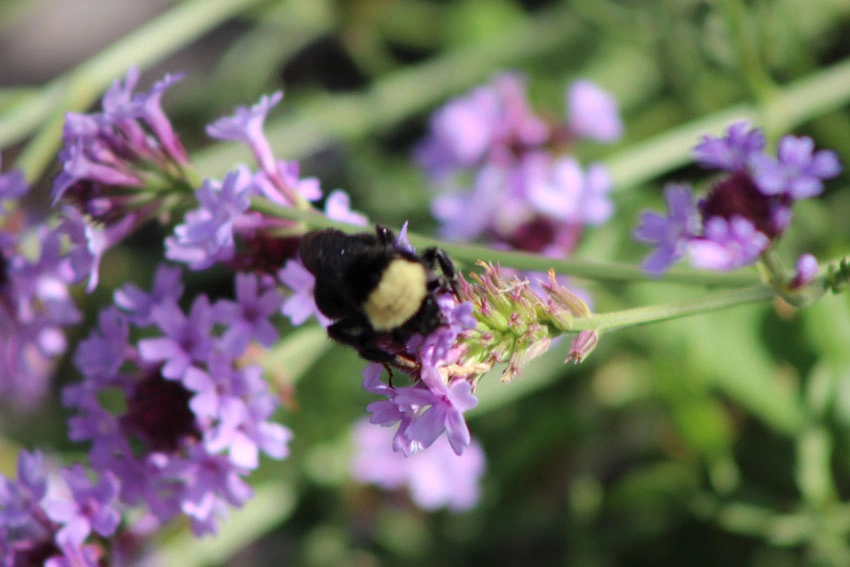
As we go through the seasons, one constant is for sure: nature has the last word. We are only caretakers, never really in charge, which makes the journey more fun, mysterious, and serendipitous. One mysterious aspect is how a once blank slate could become home to so many creatures, even in the beginning, with a minimum of plantings. How did they find it? And one of the most amazing things of all is the appearance of the Monarch butterflies. In July of 2020, about 3 or 4 years after planting Milkweed, the first Monarchs appeared. Since then, their “arrivals” have been all over the map: July, May, September. The larvae “stay” around until September/October, and as late as December this past year. This year, there have already been sightings in late March. I know there are many theories about why they have changed their “normal” migration patterns, but I prefer to focus on supporting them with Milkweed and other nectar plants.
While this project is “personal” for me, I consider it to be an important example to the public and nature lovers for habitat restoration on a micro level.
When I step onto the island for weekly maintenance, I find myself in another world, despite cars driving in either direction. Enveloped by the sights, sounds, smells, and colors of this urban oasis.
I don’t know about you, but I have been ready for Spring, its rebirth and everything that comes with it, long before the “official” first day.
I know winter is “mandatory” allowing plants to rest and recharge, but I have always been a big fan of Spring and Summer since my childhood growing up in Ohio. While I appreciate Fall colors and the quietude of Winter forcing one to look beyond the busy activities of warmer seasons and a time to evaluate and plan for planting in the coming months. For if there is one thing I have learned over 17 years, as a steward of this habitat, it is that nature is never static, requiring adjustments and changes along the way.
Serendipity is the name of the game, making life more fun and interesting.
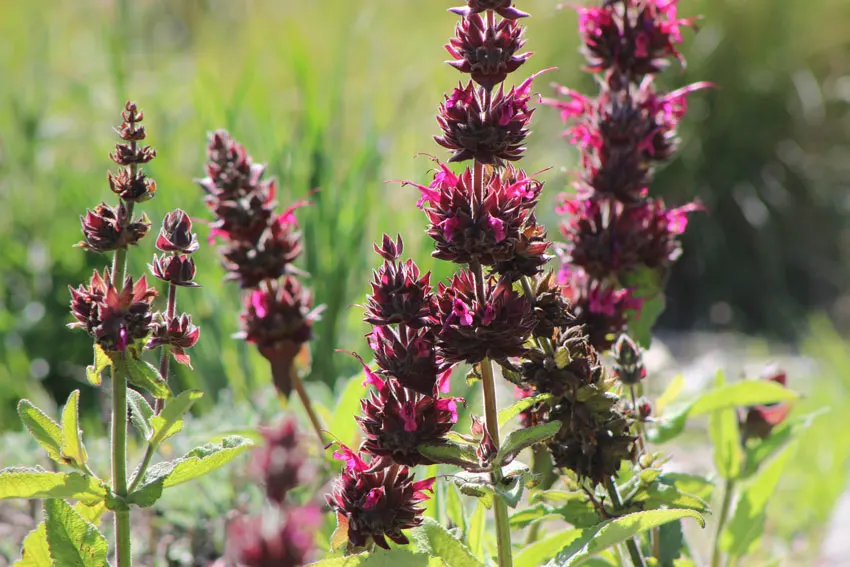
One of Spring’s first “teases” is the semi-evergreen Salvia spathacea – Hummingbird Sage, which begins to bloom in December and may continue into the Summer. It is available for early-season pollinators and Hummingbirds (Anna’s and Rufous) and native bees. It is one of the few herbaceous groundcover plants that grow well in dry shade. It boasts pagoda-like stems and is the only red-flowered native sage. Growing 1 – 3 feet tall, the magenta flowers are 1 – 1 ½ inches long. Salvia spathacea is a veritable groundcover slowly spreading by rhizomes, with its 3-8-inch-long leaves carpeting the soil. It does well on sloped areas and in the understory of Oak trees. Seeds from spent flower stalks may be spread around to propagate new plants. We also collect seeds for our local native plant nursery, Home Ground Habitats, to propagate new plants.
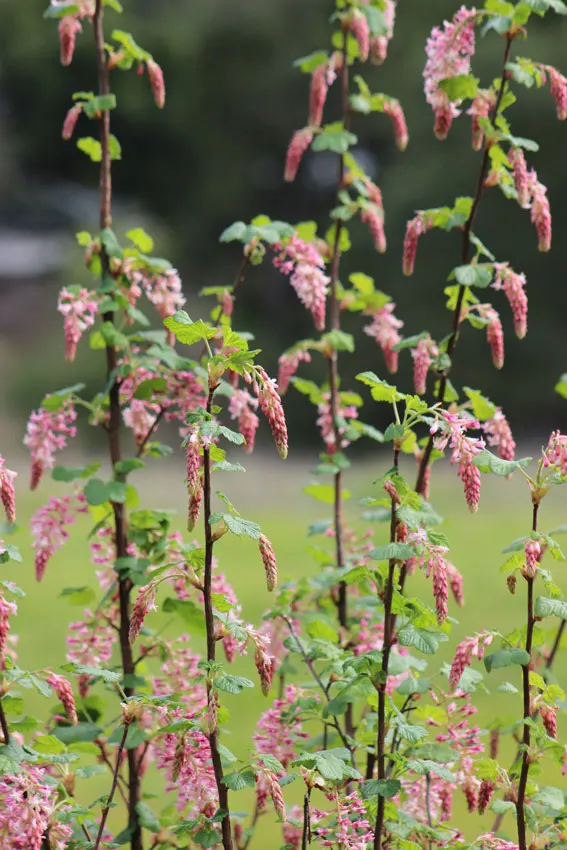
Another plant that lifts my spirit while waiting for the “full force” of Spring to descend upon us is Ribes sanguineum – California Currant. With its brief flowering period, around two to three weeks, it graces us with 2 – 4 inches long, pungent, pink to red, pendulous flowers. I call them “pink showers.” This blooming time provides early nectar for Hummingbirds and our native bees. It grows 5 – 12 feet tall with maple-like, dark green, 2 ½ – wide leaves.
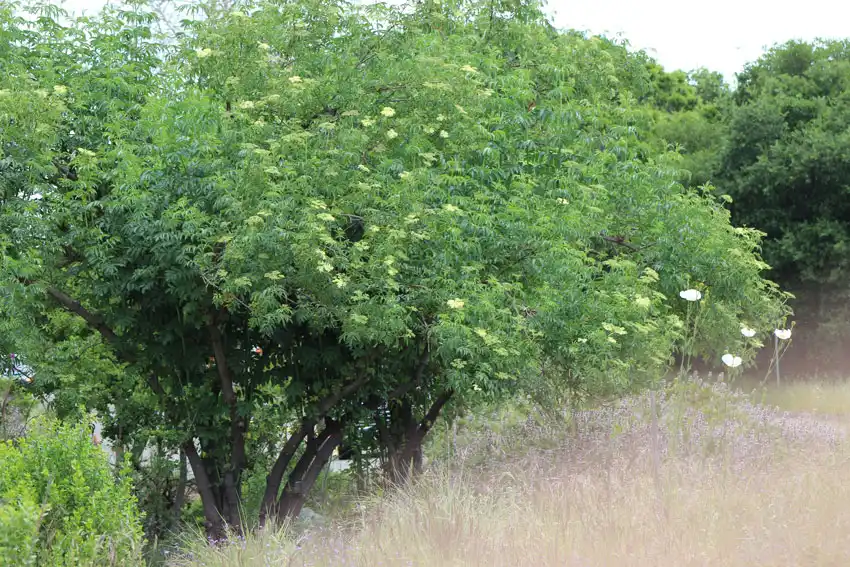
A few are growing at the edge of the Elderberry tree canopy, Sambucus mexicana, providing some moderate shade, and another grows near the middle of the island in full sun. One welcome bonus is its tendency to naturalize, whether by our feathered friends who consume the berries or just dropping off the shrub and replanting themselves.
Since I began this writing, we are 6 weeks into Spring, and the island is bursting with new life: Sisyrinchium bellum-Blue-Eyed Grass, Verbena lilacina, De la Mina Verbena, Salvia brandeegii, Verbena bonariensis, Purpletop Vervain Asclepsia fascicularis – Narrow – leaf Milkweed, Asclepsia speciosa – Showy Milkweed (with some appearances by Monarch larvae), Sambucus mexicana – Western Elderberry trees, much to the delight of numerous native bees.
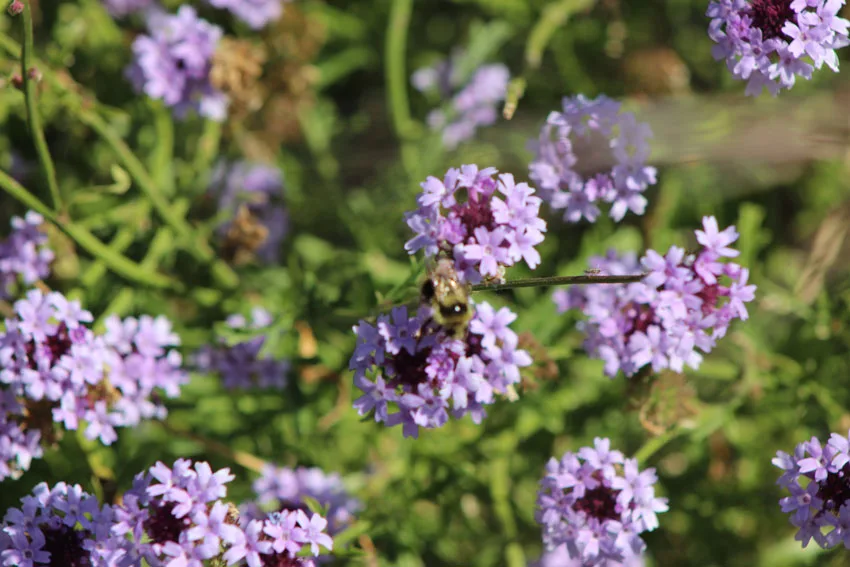
Iris, Eriogonum latifolium – Coast Buckwheat, and our elegant state grass, Nasella pulchra – Purple Needle Grass, with its golden flowers swaying in the breeze.
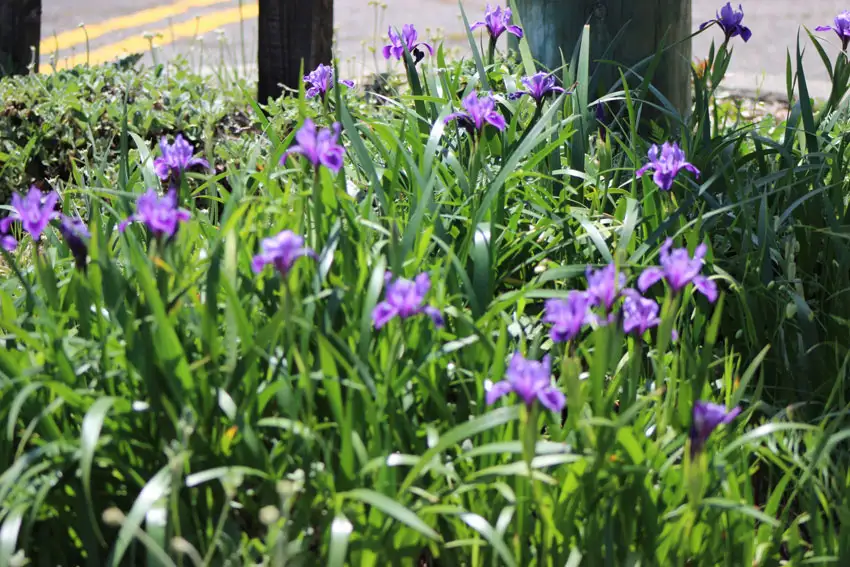
So now we stay tuned for the next round of fabulous flowers coming soon. I will be checking back with reports of voluminous yellow Gumweed blooming all over the island, accompanied by pale pink Milkweed (2 species) and hopefully Monarch larvae.
Please feel free to visit the island in person to fully appreciate this thriving habitat and all its “action.”
You may also be interested in the three pollinator gardens in the meadow across the street, which were planted by Marin County Open Space, Rotary, and community volunteers. Early in March, there were already Monarch larvae feeding on the Milkweed.
Stay tuned…….